
Credit cards that match how you spend
Compare cashback, rewards, travel and lifetime-free cards from leading banks. Tell us your income and your spends, and we'll shortlist the cards you're likely to be approved for.
Tap the card to turn it over
Find the card that fits
Three questions about how you spend. We'll show you three cards worth a look, and say why.
Question 1 of 3
Where does most of your spending go?
Browse cards by what they're good at
Pick a category, or compare up to three cards side by side.
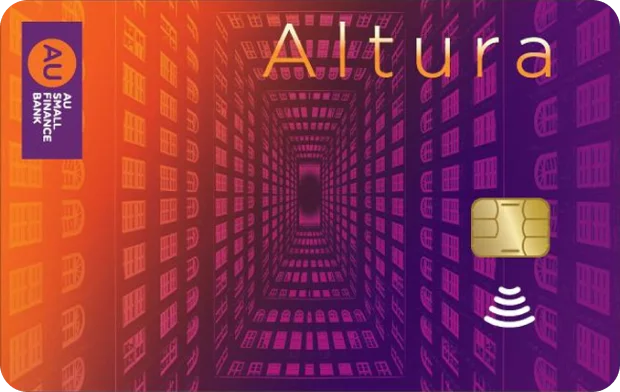
AU Small Finance Bank
AU Altura
Best for: Cashback on everyday spends
- Joining fee
- ₹199
- Annual fee
- ₹199
- Up to 2% Cashback on bills & other retail spends.
- Up to 5% Cashback on spends.
- Up to 2 complimentary at railway stations.
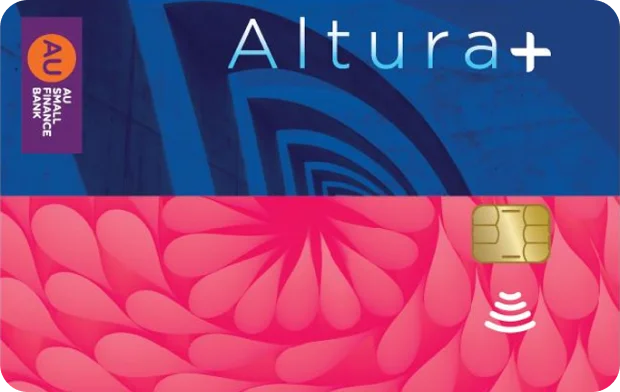
AU Small Finance Bank
AU Altura Plus
Best for: Shopping, online and in store
- Joining fee
- ₹499
- Annual fee
- ₹499
- Vouchers worth ₹500 on ₹10,000 spend.
- Up to 2 reward points per ₹100 spent on online.
- Up to 2 complimentary lounge access per calendar quarter at railway stations.
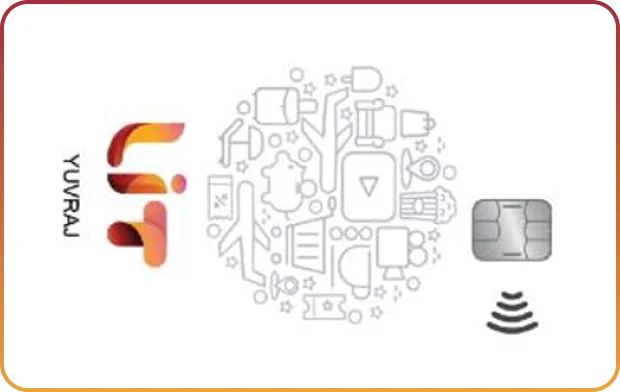
AU Small Finance Bank
AU Lit
Best for: Cashback on everyday spends
- Joining fee
- Nil
- Annual fee
- Nil
- Up to 5% cashback @ ₹299.
- 10X/5X on domestic/international spends.
- Up to 2% cashback @ ₹199.
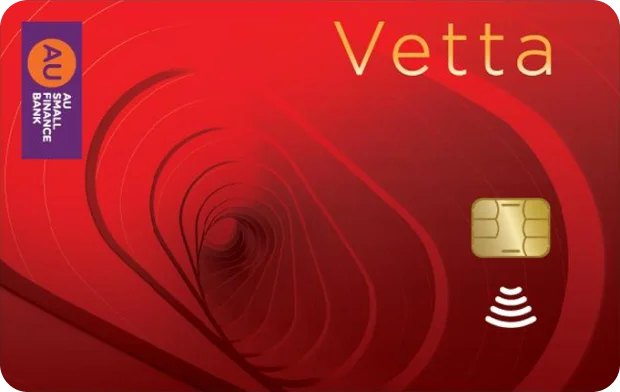
AU Small Finance Bank
AU Vetta
Best for: Earning reward points
- Joining fee
- ₹2,999
- Annual fee
- ₹2,999
- Up to 10 Reward Points per ₹100 on spends.
- Up to 1,000 bonus reward points on your birthday.
- Vouchers worth ₹2,000 on a minimum of ₹30,000 spends.
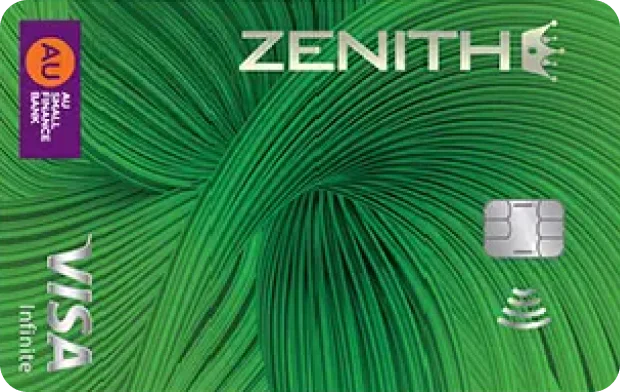
AU Small Finance Bank
AU Zenith
Best for: Eating out and ordering in
- Joining fee
- ₹7,999
- Annual fee
- ₹7,999
- Vouchers worth ₹1,000 on spends of ₹2 lakh.
- Up to 2 domestic/international lounge access.
- Up to 2 lounge access at railway stations.

AU Small Finance Bank
AU Zenith+
Best for: Travel and airport lounges
- Joining fee
- ₹4,999
- Annual fee
- ₹4,999
- Up to 16 complimentary movies tickets.
- Up to 16 domestic/international lounge access.
- Buy 1 Get 1 Free movie ticket on BookMyShow.
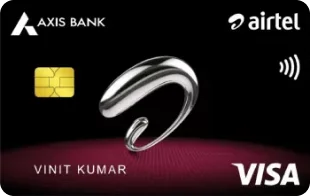
Axis Bank
Airtel Axis Bank
Best for: Cashback on everyday spends
- Joining fee
- ₹500
- Annual fee
- ₹500
- Up to 25% cashback on Airtel Thanks App.
- Complimentary domestic lounge visits yearly.
- 10% cashback on Zomato & Swiggy.
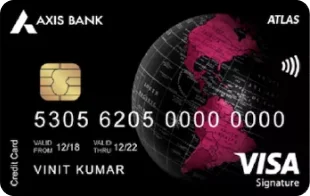
Axis Bank
Axis Bank Atlas
Best for: Travel and airport lounges
- Joining fee
- ₹5,000
- Annual fee
- ₹5,000
- Complimentary international & domestic lounge access.
- 2,500 bonus EDGE Miles on card activation.
- Extra Platinum Tier Benefits.

Axis Bank
Axis Bank Magnus
Best for: Travel and airport lounges
- Joining fee
- ₹30,000
- Annual fee
- ₹30,000
- Complimentary domestic/international lounge access.
- 5X rewards on travel spends.
- Other Travel Benefits Low forex mark-up fee of 2%.
Card fees and benefits last verified 20 Sep 2026. Banks change them without notice, and a card's own terms are the final word. We'll confirm the current terms with you before you apply.
Cards by bank
Every card we list, grouped by the bank that issues it.
- AU Small Finance Bank6 cards1 free, up to ₹7,999
- Axis Bank12 cards3 free, up to ₹50,000
- Bank of Baroda5 cards3 free, up to ₹2,499
- HDFC Bank10 cardsJoining fee up to ₹12,500
- HSBC3 cards1 free, up to ₹4,999
- ICICI Bank1 card1 free
- IDFC First Bank4 cards3 free, up to ₹499
- IndusInd Bank6 cards4 free, up to ₹15,000
- SBI5 cardsJoining fee up to ₹4,999
- Yes Bank7 cards1 free, up to ₹50,000
Types of credit cards
Most cards are built around one kind of spending. These are the ones worth knowing before you compare.
- Cashback8Money back on bills and everyday shopping.
- Rewards42Points on what you spend, redeemed against vouchers or spends.
- Travel & lounge24Air miles, hotel benefits and airport lounge visits.
- Lifetime free17No joining fee and no annual fee, for as long as you hold the card.
- Fuel6Surcharge waivers and points at petrol pumps.
- Shopping24Accelerated rewards with online and in-store retailers.
- Dining10Discounts and points on eating out and ordering in.
- Premium6Higher limits and concierge, golf and hotel benefits — at a higher fee.
What is a credit card and how does it work?
A credit card is a short-term loan you can use again and again, up to a limit the bank sets. You spend now, the bank pays the merchant, and you settle the bill once a month.
Billing cycle
Every spend in one month-long cycle goes onto a single statement. A cycle is usually about 30 days and always ends on the same date each month.
Statement
A few days after the cycle closes, the bank sends the statement: what you spent, the total due and the minimum due.
Due date
You get roughly 15 to 20 days after the statement to pay. Spends made early in a cycle can be interest-free for up to about 50 days. Cash withdrawals never are.
What you pay
Pay the total due and the credit costs you nothing. Pay only the minimum and interest starts on the rest — usually 3% to 4% a month, which is 36% to 48% a year.
The minimum due is not a discount. It keeps the account regular, but interest runs on everything you haven't paid, and new spends stop being interest-free until the balance is cleared.
How to choose a credit card
Start from your own bank statement, not from the card with the longest benefits list.
- 01
Match the rewards to your biggest spend
Look at where your money actually went last month. A fuel card is worth little if you take the metro, and a travel card earns nothing if you fly once a year.
- 02
Weigh the fee against what you'll really earn
A ₹5,000 fee card that returns 5% on ₹20,000 of monthly spends is worth it. The same card on ₹5,000 of spends is not.
- 03
Check the fee-waiver threshold
Many cards waive the annual fee once you spend a set amount in a year. Check whether that number is one you'd hit anyway, without spending more to reach it.
- 04
Read the caps and exclusions
Reward rates usually have monthly caps, and categories like rent, fuel, wallet loads, insurance and government payments often earn nothing.
Who can get a credit card
Banks look at your age, your income and your credit history. Each one sets its own bar, and the bank makes the final decision.
- Age
- 21 to 60 years for most cards
- Income
- A regular income the bank can see: salary slips, Form 16 or ITR. Entry-level cards start lower than premium ones.
- Credit score
- 700 and above improves your odds; 750 and above gets you the better cards.
- No credit history yet
- A card against a fixed deposit is the usual first step. The FD is the security, so the bank's risk is covered and approval is easier.
Meeting these does not guarantee a card. Banks also look at your existing loans, how much of your current limits you use, and your repayment record.
Documents you'll need
The same set for nearly every bank. Keeping them ready makes the application quicker.
Identity
- PAN card
- Aadhaar, passport or voter ID
Address
- Aadhaar, passport or voter ID
- A recent utility bill
Income
- Salaried: last 3 months' salary slips and bank statements, or Form 16
- Self-employed: last 2 years' ITR with computation, and bank statements
Other
- Passport-size photograph
Using a card without falling into debt
A credit card is cheap if you pay in full and expensive the moment you don't. Four habits keep it on the cheap side.
Pay the total due, every time
Not the minimum. Set an auto-debit for the full amount on the due date and treat the card like a debit card with a delay.
Keep your usage under about 30%
Using ₹90,000 of a ₹1,00,000 limit reads as strain to a credit bureau, even if you pay it all off. Ask for a higher limit or split spends across cards.
Don't withdraw cash on a card
Cash withdrawals carry a fee and start earning interest from day one. There is no interest-free period on them.
Convert a big spend to EMI before the bill, not after
Card EMI at 13% to 18% a year costs far less than revolving at 36% or more. Ask the bank within the cycle, before interest starts.
Applying through MultiBankers
Check Offers- Step 1
Tell us how you spend
Your income, your biggest spend categories and whether you want a fee-free card. Two minutes, one form.
- Step 2
We shortlist and check
An advisor matches you to cards you're likely to be approved for, and tells you which ones you aren't — before an application touches your credit report.
- Step 3
Apply once, with help
We help you with the documents and stay with you until the card is in your hand.
We are here to answer
all your questions

Usually yes, but not any card. Banks offer a card against a fixed deposit to anyone starting out: you open an FD, and the card's limit is a percentage of it. Some banks also issue entry-level cards to salaried applicants whose salary account is with them. Use it for six to twelve months, pay in full, and a regular card becomes easy.
Free means no joining fee and no annual fee, for as long as the card is open. Everything else still applies: interest if you don't pay in full, a foreign-currency markup, late-payment fees, cash-withdrawal charges and GST on all of them. Some banks also reserve the right to change a card's fee structure with notice.
You earn a set number of points for every ₹100 or ₹150 you spend, and the rate is usually higher in the card's chosen categories. What a point is worth depends on how you redeem it — vouchers and partner catalogues are typically worth more than a statement credit. Check the cap on accelerated categories and the list of spends that earn nothing.
Each application adds a hard enquiry to your report, and several enquiries in a short span can pull the score down a few points. One application is nothing to worry about. Applying to four banks in a month is. Tell us what you're looking for and we'll point you at the one most likely to approve you.
Enough to cover your two or three biggest spend categories, and no more than you can track. Two well-chosen cards beat five that you forget to pay. Extra cards do raise your total limit, which helps your utilisation ratio, but only if none of them carries a balance.
Upgrading keeps your existing account and its age, and it usually needs no fresh documents or credit enquiry. A new card from another bank makes sense when you want benefits your current bank doesn't offer, or a second issuer's network. If the upgrade fee buys benefits you'll use, it's the simpler route.
A second card on your account for a family member, usually free. Their spends come onto your statement and share your limit, and you are responsible for paying them. Rewards pool into one account, which makes a family's spending easier to track — and easier to overspend, so set a limit on the add-on if your bank allows it.
A percentage the bank adds to any spend in a foreign currency, including online purchases from overseas sites. Most cards charge around 3.5%, plus GST on that; travel cards bring it down to about 1% to 2%. If you spend abroad often, that difference is worth more than most welcome benefits.
Yes, for spends above a minimum the bank sets, and usually only within the same billing cycle. The bank charges interest on the EMI, and often a one-time processing fee, so ask for the total cost and not just the monthly figure. It is still far cheaper than letting the balance revolve.
Clear the balance, redeem the points first — most banks cancel them on closure — and ask for a written confirmation. Closing an old card shortens your credit history and cuts your total limit, which can nudge your score down. If the card is free, keeping it open and using it occasionally is often the better move.
Talking to us doesn't. A lender runs a credit check (a "hard enquiry") only when you formally apply, and we help you avoid applying to lenders likely to reject you.
Not sure which card to pick?
Tell us how you spend. An advisor will shortlist the cards you're likely to be approved for.